



Water Ballast Solar Panel Mount – 15° Landscape Mounting Base
Create a secure, low-profile solar array on a suitable flat roof or prepared ground surface. This water-filled ballast mount supports framed solar panels in landscape orientation without routine roof penetrations, subject to structural and wind-load approval.
- Fixed tilt: 15°
- Panel orientation: Landscape
- Dimensions: 1116 × 378 × 280mm
- Empty weight: 5kg
- Water-filled weight: Approximately 70kg
- Applications: Suitable for flat roofs and prepared ground surfaces
- Recommended rail layout: Full-length rails for standard 550W panels and larger
Important: The listed price is for the water ballast mount only. Solar panels, rails, rail joins, clamps, fasteners and installation are not included unless specifically quoted.
Choose a practical solar mounting solution designed to provide stable support while helping preserve the roof membrane.

 Water Ballast Mount
R1, 127.17
Water Ballast Solar Panel Mounting System for Flat Roofs and Ground Arrays
The JC Solar Panels water ballast mount provides a practical foundation for installing framed solar panels in landscape orientation on suitable flat roofs and prepared ground surfaces. Once correctly positioned and aligned, each ballast is filled with water to increase its mass and help stabilise the mounting structure.
This mounting method can reduce the need for routine penetrations through the roof membrane. However, every installation must still be designed according to the site conditions, roof load capacity, module dimensions, wind exposure and approved solar-panel clamp zones.
Stable Water-Filled Mounting Base
Each ballast mount weighs approximately 5kg when empty, making it easier to position during the initial layout. Once filled to the specified level, its mass increases to approximately 70kg.
The resulting weight helps resist movement while supporting the rails and framed solar panels above the mounting surface. The required number and positioning of ballasts must be determined for the specific project and must not be based on weight alone.
Fixed 15° Solar Panel Tilt
The ballast mount supports solar panels at a fixed 15° angle in landscape orientation. This low-profile configuration promotes water drainage while providing a practical panel angle for suitable flat-roof and ground-mounted solar arrays.
The fixed angle also helps create a consistent appearance across multiple rows. Correct row spacing should be calculated to provide installation access, drainage and suitable separation between rows.
Full-Length Rails Recommended for 550W Panels and Larger
JC Solar Panels recommends full-length rails as the preferred mounting arrangement for standard 550W solar panels and larger modules. Continuous rails connect multiple ballast supports into a more rigid mounting structure and help limit flexing in larger solar panels.
A typical full-rail installation can use 4.8m LDIP aluminium mounting rails with approved rail joins where required. The final rail spans, joining points and ballast spacing must be confirmed for the selected panel dimensions, frame design and approved clamp zones.
A correctly planned full-length rail layout may avoid adding centre ballasts solely for panel support. Any ballast required for wind resistance must still be retained according to the approved design.
Alternative Short Rail Arrangement
Short rail sections remain an alternative for smaller solar panels where the approved mounting design permits their use. Typical short sections are approximately 400mm long, with two sections fitted to each ballast to support the upper and lower mounting points.
The short-rail option should only be selected after considering the panel size, frame rigidity, approved clamp positions, rail spans and environmental loading. For larger modules, continuous full-length rails remain the recommended option.
Optional Centre Ballast Support
An additional centre ballast may be included where the approved rail and panel-frame arrangement requires more support. The centre ballast supports the module through suitably connected rails and must not press directly against the solar-panel glass or backsheet.
A centre ballast is not automatically required where full-length rails already provide adequate support. Its use must be determined by the final mounting design and the applicable wind-loading requirements.
Typical Applications
- Suitable flat concrete roofs with verified structural capacity
- Prepared, level and stable ground-mounted solar areas
- Low-profile residential and commercial solar arrays
- Installations where routine roof penetrations should be minimised
- Landscape solar-panel layouts using continuous mounting rails
Technical Specifications
- Overall length: 1116mm
- Overall width: 378mm
- Overall height: 280mm
- Fixed module tilt: 15°
- Module orientation: Landscape
- Mass when empty: 5kg
- Approximate water-filled mass: 70kg
- Preferred rail option: Full-length rails
- Alternative rail option: Approximately 400mm short rail sections where approved
Installation Planning Requirements
Before installation, confirm that the mounting surface is stable, even and capable of supporting the completed array. Flat roofs must be checked for structural loading, waterproofing condition, drainage and safe installation access.
The complete layout must account for local wind conditions, ballast quantity, row spacing, panel dimensions, frame construction, approved clamp zones and rail support spans. Protective material may also be required between the ballast and roof surface to protect the waterproofing system.
Ballasts should initially be positioned while empty. The rails can then be aligned and secured using compatible clamps, rail joins and fasteners. Once the complete layout has been checked, the ballasts can be filled to the specified level and inspected for correct alignment and secure caps.
Panel Clamping and Rail Requirements
A standalone solar panel should be secured using four suitable end clamps positioned within the panel manufacturer’s approved clamp zones. Continuous rows generally use end clamps at the outside edges and mid clamps between adjacent panels.
Solar panels must never be supported directly beneath the glass or backsheet. Do not drill into the panel frame or use clamping positions that have not been approved by the solar-panel manufacturer.
Inspection and Maintenance
Inspect the mounting system at least twice per year and after severe weather. Check the ballast water levels, filling caps, rails, rail joins, clamps, fasteners, panel alignment, cable clearances, roof protection and drainage paths.
Any loose components, movement, water loss or damage must be addressed promptly by a suitably qualified person.
What Is Included?
The listed product price covers one water ballast mounting base only. Solar panels, aluminium rails, rail joins, mid clamps, end clamps, fasteners, roof-protection materials, electrical components and installation are not included unless specifically stated in your quotation.
Contact JC Solar Panels with the solar-panel model, panel quantity, installation surface and proposed row configuration for assistance calculating the approximate number of ballasts, rails and mounting components required.
Important Design Notice
Ballasted solar mounting systems require site-specific assessment. Final suitability, ballast quantities, rail spans and installation layout must be confirmed according to the structure, environmental conditions and applicable engineering requirements. Product wattage is only a selection guide; actual panel dimensions and approved clamping zones determine the mounting arrangement.
Only logged in customers who have purchased this product may leave a review.
Datasheets
| Weight | 5 kg |
|---|---|
| Dimensions | 28 × 111.6 × 37.8 cm |

Related products
-
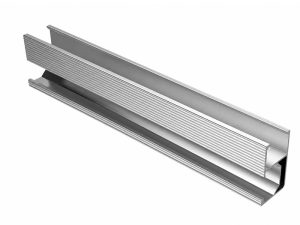
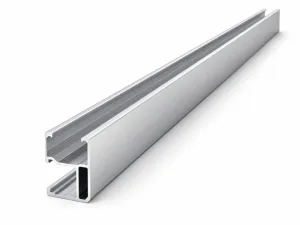
Powerco 4.7m Solar Mounting Rail
R494.50



You may add any content here from XStore Control Panel->Sales booster->Request a quote->Ask a question notification
At sem a enim eu vulputate nullam convallis Iaculis vitae odio faucibus adipiscing urna.
Reviews
There are no reviews yet.