
Get in touch:
062 881 5615
COMMERCIAL • AGRICULTURAL • INDUSTRIAL
Complete Solar Commercial Energy Solutions
Reduce reliance on purchased electricity, protect critical operations during power interruptions and build energy capacity around the way your business actually operates. JC Solar Panels designs, supplies and installs complete commercial solar, battery-storage and energy-management solutions for businesses, farms, warehouses and industrial facilities across South Africa and selected African markets. Every solution is developed around the site’s electrical supply, consumption profile, operating hours, available roof or ground space, backup priorities and future expansion plans. From individual commercial installations to phased, multi-site and large-scale energy projects, our accredited professional installers and engineering specialists manage the process from assessment and system design through to installation, testing and commissioning.
South Africa and selected African markets • Complete supply-and-install solutions
operating costsImproved
energy securityScalable
commercial solutions
ENGINEERING STARTS WITH YOUR BUSINESS
Commercial Solar System Solutions
A warehouse, irrigation operation, retail centre and manufacturing plant may have similar monthly electricity accounts while having completely different energy requirements. Operating hours, peak demand, motor-starting loads, refrigeration, production equipment, seasonal consumption and the financial cost of an interruption all influence the correct system design.
Our team begins by assessing the site’s electrical supply, consumption profile, existing infrastructure, available roof or ground space and future expansion plans. Where available, electricity accounts and interval consumption data help us understand when energy is being used—not only how much electricity is consumed during the month.
The system is then designed around the project’s actual objective. This may be to reduce daytime grid consumption, protect selected critical equipment, improve operational continuity, integrate an existing generator or create a scalable foundation for future solar generation and battery storage.
JC Solar Panels works with experienced, accredited commercial solar installers, electricians and engineering professionals who understand the requirements of three-phase electrical systems and larger solar installations. The installation scope is carefully planned around cable routes, electrical protection, switchgear, mounting requirements, equipment positioning, site access and the operating conditions of the property.
For more complex commercial, agricultural and industrial projects, further electrical, structural or site assessments may be required before the final system capacity and installation cost can be confirmed. The result is a practical, professionally installed solar solution with clearly defined capabilities, responsibilities and room for future expansion.
The electricity tariff is also an important part of the assessment. Two businesses using the same total number of kilowatt-hours can experience very different electricity costs because of maximum-demand charges, time-of-use periods, seasonal tariffs and the times at which large equipment operates. Where suitable account and interval-consumption information is available, we use it to identify where solar generation, battery storage or operating changes may offer the greatest practical value.
Critical-load planning is handled separately from ordinary electricity consumption. Instead of assuming that every circuit must remain operational during an outage, we work with the customer to identify the equipment that genuinely protects safety, production, refrigeration, communications, security or essential business services. This helps determine the required inverter power, battery capacity, discharge capability and expected backup duration without unnecessarily oversizing the system.
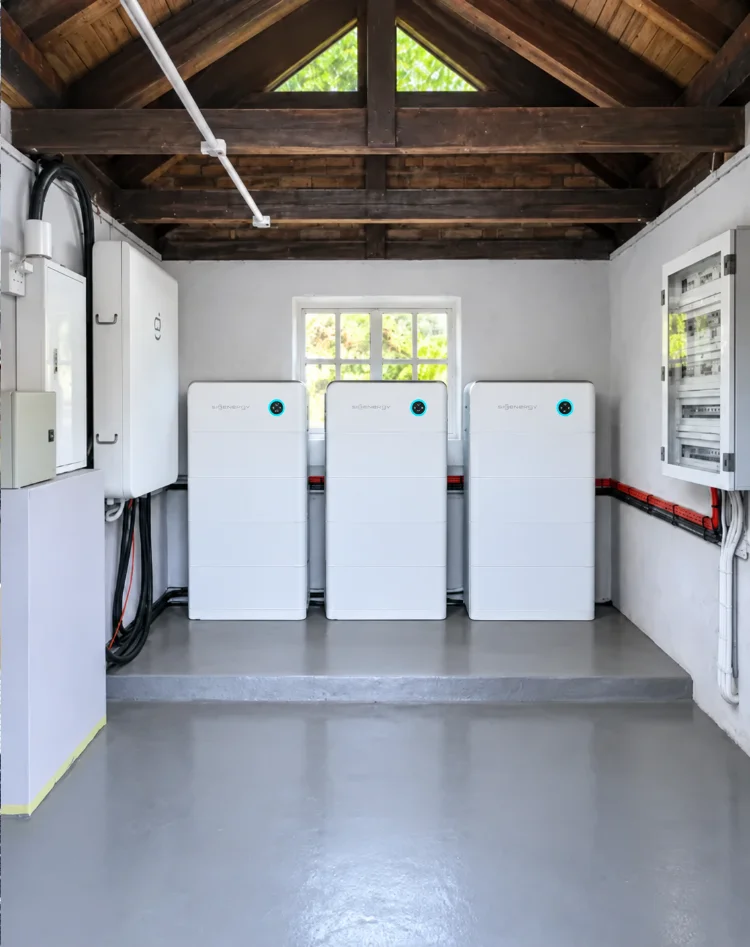
SOLUTIONS BY SECTOR
Solar Designed for Your Industry
01 / COMMERCIAL
Businesses & Commercial Properties
For offices, warehouses, retail centres, schools, hospitality and multi-tenant properties. We assess daytime consumption, essential circuits and operating schedules to identify where solar generation and storage can support cost control and continuity.
02 / AGRICULTURAL
Farms & Agricultural Operations
For irrigation, boreholes, pack houses, cold rooms, poultry, livestock and processing operations. Designs consider seasonal usage, pump and motor loads, remote infrastructure and the equipment that must remain operational during an interruption.
03 / INDUSTRIAL
Industrial & Large-Scale Projects
For factories, manufacturing facilities, mines and high-demand sites. Project planning considers load profiles, electrical distribution, available grid capacity, installation constraints and phased expansion, including larger battery-storage requirements.
SOLAR GENERATION
Put Your Roof or Available Land to Solar Energy Production
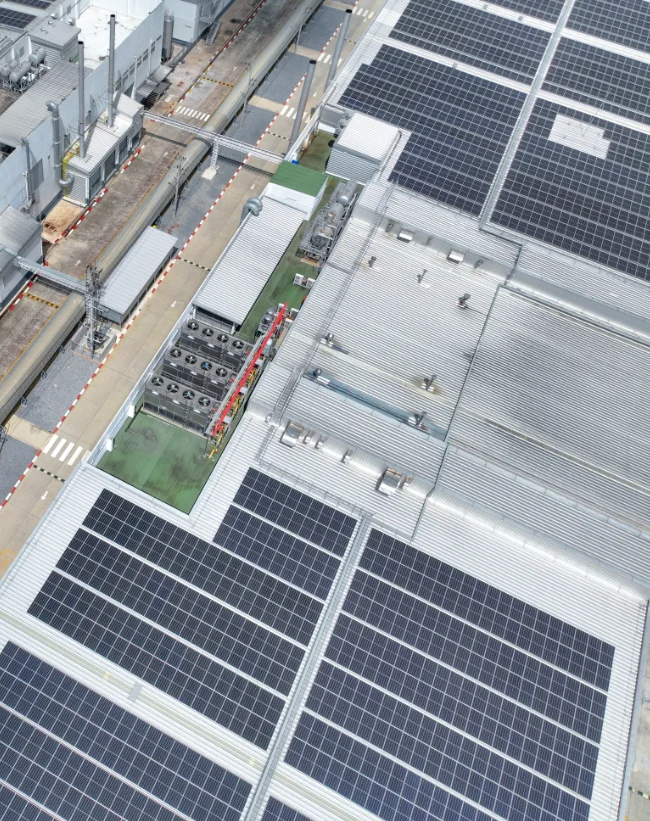
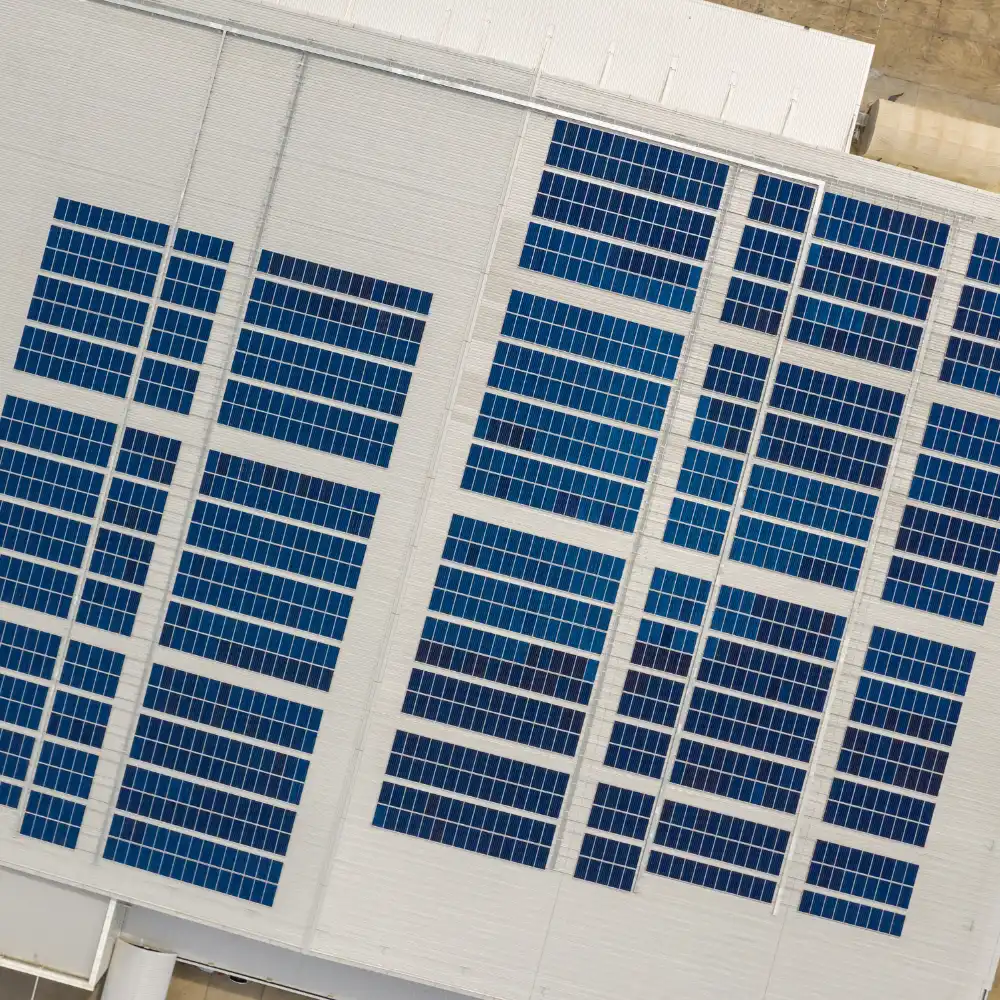
Commercial solar PV can turn an underused roof, carport or suitable section of land into a productive energy asset. By generating electricity at the property, the system can supply part of the site’s daytime demand and reduce the amount of electricity purchased from the grid.
The correct solar array is not simply the largest number of panels that can fit. It must be designed around the property’s electricity-consumption profile, operating hours, available electrical capacity and commercial objectives. A facility with strong daytime consumption may benefit from a grid-tied solar system, while a site requiring backup power or energy outside solar-production hours may need a hybrid solution with battery storage.
Our assessment considers the usable installation area, roof orientation, shading, structural condition, drainage, cable routes, inverter positioning and safe maintenance access. For ground-mounted projects, the available land, terrain, security, civil requirements and distance from the main electrical infrastructure must also be evaluated.
JC Solar Panels works with experienced commercial solar installers who understand the planning and practical requirements of larger rooftop, carport and ground-mounted installations. Mounting systems, electrical protection, isolation equipment, string design, switchgear and cable sizing are selected according to the project requirements and the equipment used.
Where required, structural assessments, detailed electrical studies and applicable grid or municipal requirements are incorporated into the project-planning process. Installation activities can also be coordinated around site access, working hours and operational restrictions to reduce unnecessary disruption to the business.
Our objective is to provide a professionally installed solar-generation system that uses the available space effectively, produces energy when the site can use it and provides a practical foundation for monitoring, battery storage or future expansion.
Ordinary grid-tied solar does not provide backup power during a grid outage. A grid-tied inverter is required to disconnect when the utility supply fails. Businesses requiring continuity during outages need an appropriately designed hybrid or backup system with compatible battery storage, controls, isolation equipment and clearly defined essential loads.
COMMERCIAL BATTERY ENERGY STORAGE
Protect Critical Loads. Manage Solar Energy More Intelligently.
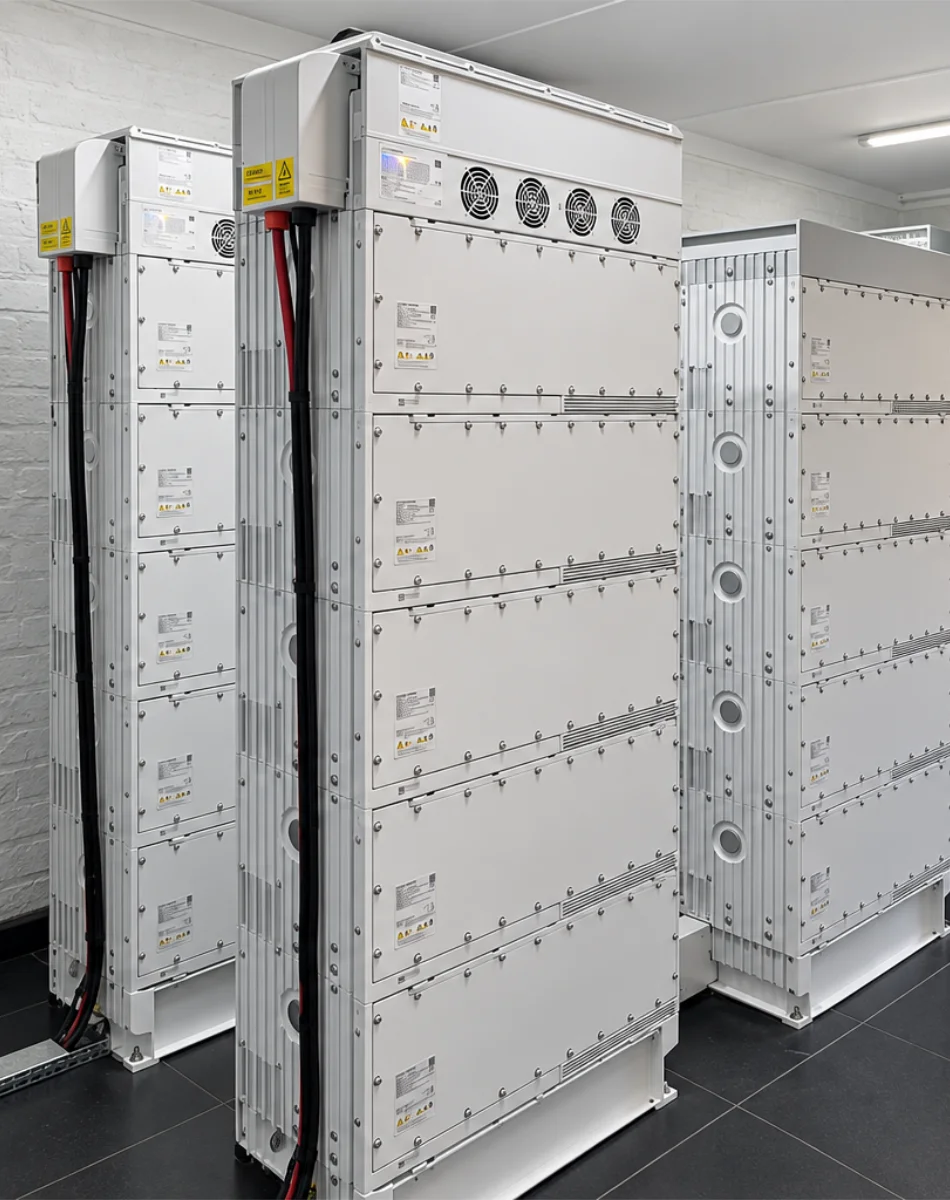
Commercial battery energy storage can provide far more than temporary backup power. When correctly designed, it can support selected equipment during outages, store surplus solar generation, shift energy use between different periods, and improve the way electricity is managed across the property.
The first step is identifying which loads genuinely need protection. Critical loads may include refrigeration, cold rooms, security systems, communications, essential lighting, office infrastructure, pumps, selected production equipment, or control systems. Attempting to back up every load can make a project unnecessarily expensive, while excluding an important motor or operational process can leave the business exposed.
Battery capacity in kilowatt-hours determines how much usable energy is available, while power output in kilowatts determines how much equipment the system can operate at the same time. Both must be assessed alongside motor-starting currents, operating schedules, expected outage duration, available charging capacity and the reserve that must remain available for unexpected interruptions.
Where the electricity tariff and consumption profile support it, battery storage may also be used for energy shifting or peak-demand management. The battery can charge from available solar generation or during selected periods and discharge when grid electricity is more expensive, or site demand is higher. The commercial value of this strategy depends on the applicable tariff, interval consumption data, battery cycle requirements, and the way the facility operates.
Storage can also be coordinated with solar generation and generator backup. A properly integrated system may reduce unnecessary generator runtime, maintain a battery reserve for critical operations, and determine when energy should be supplied by solar, battery, generator, or the grid. The final operating strategy depends on the selected equipment and the site’s electrical design.
JC Solar Panels works with experienced commercial solar installers, electricians and engineering professionals to plan the battery system around the facility’s electrical infrastructure. Equipment positioning, cable routes, electrical protection, isolation, ventilation, environmental conditions, access control and manufacturer installation requirements are considered as part of the project scope.
Not every business requires battery storage, and not every load needs backup. Our objective is to identify where storage provides practical operational value and then design a scalable system with clearly defined capabilities, backup limits, and expansion options.
INTEGRATED ENERGY SYSTEMS
Connect Generation, Storage and Control
RESILIENCE
Generator Integration
Existing or new generators can be considered within the energy design. Compatibility, changeover arrangements, operating limits and load priorities must be assessed before specifying the integration.
VISIBILITY
Monitoring & Energy Management
Appropriate monitoring helps teams understand solar production, grid use and battery performance. Control strategies can be configured around operating hours, available tariffs and the selected equipment.
FUTURE PLANNING
Expansion & EV Charging
Planned production growth, additional facilities and workplace or fleet charging should be identified early. Expansion and charging capacity remain subject to equipment compatibility and the site’s electrical capacity.
LARGE-SCALE PROJECT PLANNING
A Clear Path from Feasibility to Solar Energy Commissioning
Large commercial, agricultural and industrial energy projects require coordinated technical, operational and financial planning. JC Solar Panels works with experienced commercial solar installers, electrical professionals and engineering specialists to assess solar generation, battery storage, electrical integration, procurement and installation requirements.
The process begins with a feasibility assessment of the property’s electricity consumption, peak demand, operating schedule and critical loads. Existing electrical infrastructure, transformer capacity, available roof or ground space, grid connection and future expansion plans must also be understood before an appropriate project capacity can be established.
Project sizing is therefore based on site data rather than a standard package. Electricity accounts, interval consumption data, equipment schedules and details of existing generators or solar infrastructure can be used to develop the initial design. More complex projects may require site inspections, electrical studies, structural assessments or further engineering work before the proposal can be finalised.
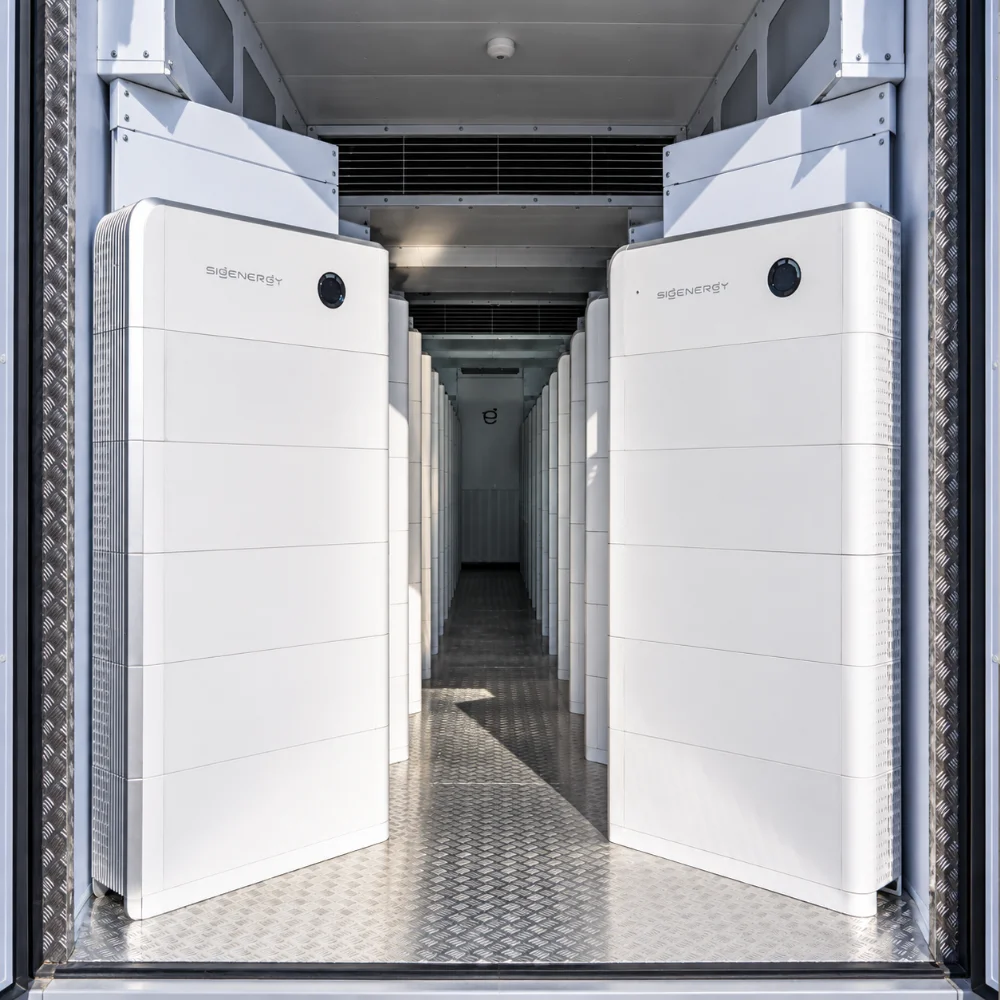
Depending on the project requirements, the solution may include commercial rooftop solar, solar carports, ground-mounted arrays, three-phase inverters, high-voltage battery storage, containerised energy systems, generator integration and centralised energy management. These elements must operate as one coordinated system rather than as independently selected components.
Site access, civil works, equipment foundations, cable routes, lifting requirements, security, environmental conditions and delivery logistics are considered during project planning. This is particularly important for larger battery systems and containerised solutions, where equipment positioning and safe access can materially affect the final installation scope.
Our professional commercial installation teams coordinate the physical installation, electrical integration, testing and commissioning according to the agreed project design. Where required, project responsibilities can include equipment procurement, mounting infrastructure, switchgear, protection equipment, monitoring and applicable compliance work.
Projects outside South Africa are considered individually and remain subject to local electrical requirements, permissions, partner availability, logistics and site conditions. We can assess opportunities in selected African markets where the project scope and delivery requirements are commercially practical.
The objective is to provide a clear path from initial feasibility through design, procurement, installation and commissioning—with defined responsibilities, realistic system capabilities and a scalable foundation for the property’s future energy requirements.
EXPERIENCED PROJECT DELIVERY
Professional commercial solar Installers
A commercial solar installation is only as dependable as the planning, workmanship and electrical integration behind it. Equipment selection matters, but long-term performance also depends on correct mounting, cable sizing, electrical protection, equipment positioning, commissioning and the experience of the installation team.
JC Solar Panels works with accredited, professional solar installers, qualified electricians and engineering specialists experienced in smaller commercial systems, three-phase installations, agricultural applications and larger industrial energy projects. The level of engineering and project supervision is matched to the size, complexity and technical requirements of each installation.
Before installation begins, the project scope is defined around the approved system design, site conditions and operational requirements. This includes the solar-panel layout, mounting method, inverter and battery positioning, cable routes, switchgear, isolation equipment, electrical protection and connection to the property’s existing distribution system.
Commercial sites often require careful coordination. Installation work may need to be planned around operating hours, production schedules, tenant access, restricted work areas and the availability of shutdown periods. Roof access, working-at-height requirements, lifting equipment and the safe movement of materials are also considered when planning the installation.
Our installation teams work with equipment from established solar, inverter and battery manufacturers, following the relevant manufacturer requirements and the agreed project design. Where a system includes battery storage, generator integration, energy management or existing solar equipment, these elements must be tested as part of one coordinated energy solution.
Testing and commissioning confirm that the equipment, protection devices, monitoring and operating modes function according to the intended design. Backup priorities, battery reserve settings, export limitations and generator controls are configured according to the selected equipment and the requirements established during the assessment.
The agreed scope may also identify electrical compliance documentation, applicable registration assistance, specialist engineering work and any exclusions that remain the customer’s responsibility. These requirements are clarified during project planning rather than being assumed after installation has started.
At handover, the customer should understand how the system operates, which loads are supported, what limitations apply and how performance can be monitored. Maintenance, technical support and future expansion requirements can also be discussed so that the completed installation remains practical beyond the initial commissioning date.
OUR PROJECT PROCESS
From First Enquiry to an Engineered Proposal
01
Understand the Site
Share your location, business activity, electricity account and primary energy objective. You do not need to know the inverter size or panel quantity before speaking to us.
02
Assess & Design
Our team reviews the load profile and electrical infrastructure. Site inspections, interval data and specialist studies are requested where needed to develop the design.
03
Deliver & Commission
Once the scope and commercial terms are agreed, installation is planned around site access and operational constraints, followed by testing, commissioning and handover.
PROJECT FUNDING
Choose a Funding Route That Fits the Project
Projects may proceed as a direct purchase or be assessed for finance through an independent financing partner. Suitable larger commercial, agricultural and industrial projects may also be considered for a Power Purchase Agreement.
A PPA generally involves purchasing electricity under an agreed contract rather than purchasing the installation outright. Ownership, tariffs, escalation, maintenance responsibilities and end-of-term arrangements depend on the specific agreement.
Funding is available only for qualifying complete solutions supplied and installed through our teams. Finance partners determine eligibility, credit vetting, affordability requirements and final terms. Submitting an enquiry does not guarantee approval.
PROJECT QUESTIONS
Commercial Solar: Frequently Asked Questions
We assess electricity consumption, operating hours, peak demand, electrical supply and available installation space. Where available, interval consumption data provides a more useful picture than a monthly bill alone.
Not necessarily. A site focused on daytime electricity use may benefit from solar PV without storage. Batteries are considered where there is a defined backup, energy-shifting or demand-management requirement.
That depends on the load and the design. Supporting selected critical equipment is different from backing up an entire facility. Motor starts, continuous demand and required runtime must be assessed before backup capability is confirmed.
Existing equipment can be assessed for integration or expansion. Compatibility, condition, capacity and the original installation design must be checked before confirming what can be retained.
Yes. Agricultural enquiries can include irrigation, pumping, cold storage, pack houses, poultry and processing. Seasonal demand and motor requirements are included in the assessment.
Savings and payback depend on the tariff, consumption profile, design, cost and operating assumptions. Any estimate should be based on project-specific information and stated assumptions, not a blanket promise.
Qualifying projects may be assessed through independent financing or project partners. Availability and contractual terms are subject to partner approval, credit assessment and project viability.
Send the site location, type of operation, approximate monthly electricity account and main energy objective. Recent electricity accounts and interval data, if available, help the assessment.
Commercial, agricultural and industrial projects can be assessed across South Africa. Site access, travel, logistics and team availability are included when the project scope is established. Selected African projects are assessed individually.
The proposal defines the equipment, installation work and project deliverables. Specialist studies, civil or structural work, network upgrades, compliance requirements and ongoing maintenance are identified as applicable, rather than assumed to be included.