
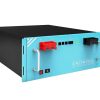

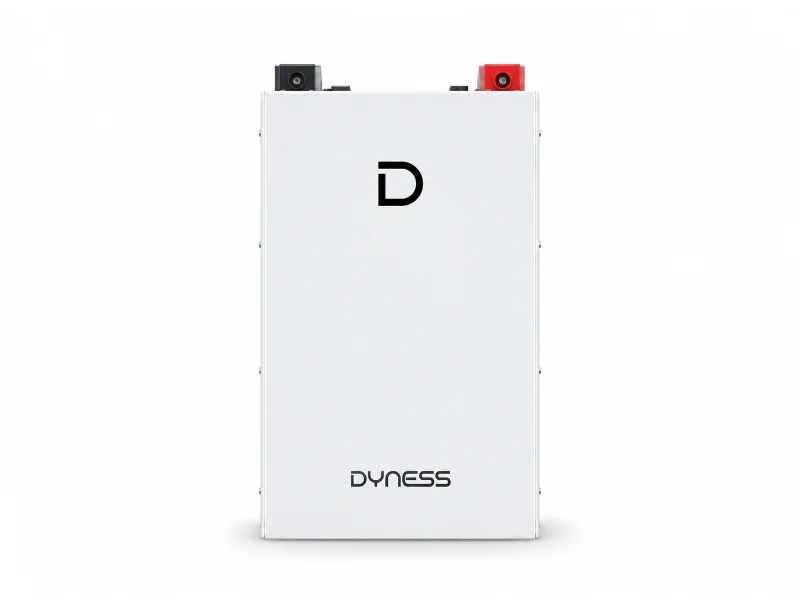
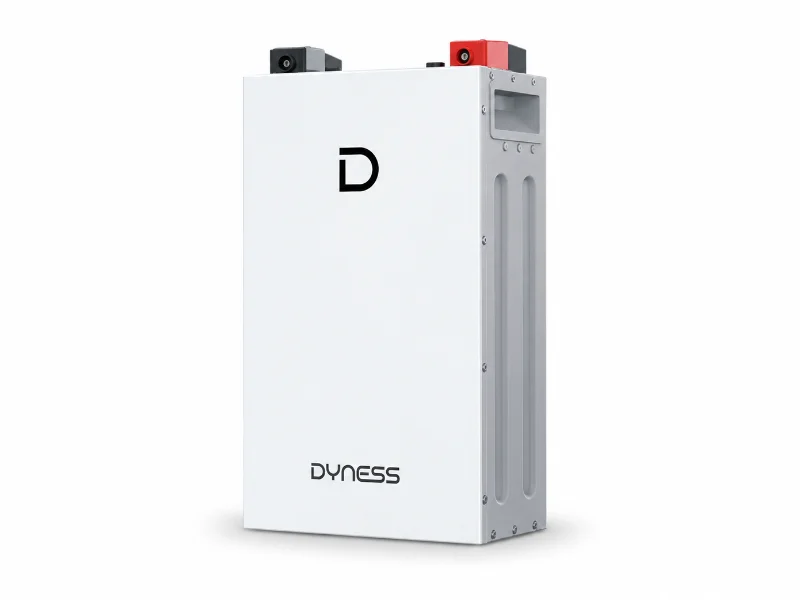
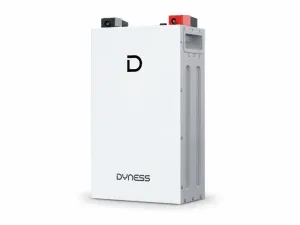


Dyness DL5.0F 5.12kWh LiFePO4 Battery
The Dyness DL5.0F is a 51.2V lithium iron phosphate battery designed for residential and small-commercial solar-energy storage. Each battery provides 5.12kWh of nominal energy and 4.864kWh of stated usable energy, with a 100Ah nominal capacity and 95% depth of discharge.
It can store daytime solar production for use after sunset, support selected loads during grid interruptions and help a compatible hybrid inverter manage energy use. The battery can also form part of a larger bank where more backup time or storage capacity is required.
5.12kWh Nominal and 4.864kWh Usable Energy
The DL5.0F provides 5.12kWh of nominal battery energy. Dyness lists 4.864kWh as usable energy, based on a 95% depth of discharge. This gives the system designer a clear distinction between the battery’s nominal rating and the energy intended to be available within the specified operating limits.
Actual AC energy delivered to appliances will be lower than the DC usable-energy figure because inverter conversion losses, cable losses, standby consumption, temperature, battery age and operating settings all affect the final result. Backup duration must therefore be calculated from the customer’s real load profile rather than from capacity alone.
51.2V Low-Voltage LiFePO4 Platform
The battery uses LiFePO4 chemistry with a nominal voltage of 51.2V and an operating-voltage range of 44.8V to 57.6V. It is intended for compatible low-voltage inverter systems that support the required communication protocol and battery parameters.
LiFePO4 chemistry is widely used in stationary solar storage because it combines stable operating characteristics with a long service life. The inverter model, firmware, communication cable and selected battery protocol must still be verified before installation.
1C Discharge Performance
The maximum discharge rate is 1C, equivalent to 100A and a published maximum discharge power of 5.12kW. Peak discharge current is specified as 110A for 15 seconds at 25°C. This short-duration capability can assist with temporary load demand when the inverter, protection equipment and battery configuration are correctly matched.
Maximum discharge capability does not guarantee that every connected inverter or load can draw the full amount. Inverter output rating, surge limits, state of charge, battery temperature, cable sizing, protection settings and the number of batteries connected in parallel all affect available system power.
Recommended and Maximum Charging
Dyness recommends a 0.5C charge and discharge rate, equal to 50A and approximately 2.56kW. The maximum charging rate is 0.75C or 75A, corresponding to 3.84kW of maximum charge power.
Operating at the recommended rate places less demand on the cells than continuous operation at the maximum values. Final inverter settings should follow the current Dyness installation instructions and any requirements attached to the applicable battery warranty.
More Than 8,000 Cycles
The datasheet specifies a cycle life of at least 8,000 cycles under test conditions of 0.2C charging and discharging, 25°C, 95% depth of discharge and 70% end of life. Cycle-life figures describe performance under defined laboratory conditions and should not be treated as an exact calendar-life guarantee.
Real service life depends on operating temperature, charge and discharge current, depth of discharge, time spent at high or low state of charge, installation quality, firmware, maintenance and system configuration.
Integrated Fire-Suppression Protection
The DL5.0F includes a built-in aerosol fire extinguisher. Dyness states that the intelligent fire-extinguishing system can detect and extinguish fire within five seconds. This is an additional battery-level safety feature and does not replace the electrical protection, installation clearances, ventilation, fire planning or local compliance measures required for the complete system.
The battery has an IP20 protection rating and should be installed in a dry, controlled indoor environment where it is protected from water, condensation, excessive dust, direct heat and physical damage.
Flexible Installation Options
The battery supports wall-mounted, floor-standing, flexible-bracket and rack-mounted installation. It is compatible with standard 19-inch racks, allowing it to be used as an individual wall or floor unit or integrated into a structured battery cabinet.
The enclosure measures 345 × 548 × 146mm in width, depth and height and has a net weight of 41kg. The mounting surface, bracket, shelf or rack must support the equipment safely, and the installer must maintain the access and clearances required by the current installation manual.
Expansion Up to 50 Batteries
Up to 50 DL5.0F batteries can operate in parallel, expanding nominal capacity from 5.12kWh for one unit to 256kWh for 50 units. This allows a system to start with a smaller storage bank and scale for longer backup periods or greater energy consumption.
Battery expansion must follow Dyness requirements for permitted quantity, battery state of charge, cable arrangement, protection, communication, firmware and commissioning. Batteries should not be added to an existing bank without first confirming compatibility and the manufacturer’s procedure for combining units of different ages or states of health.
CAN and RS485 Communication
The DL5.0F supports CAN and RS485 communication. Communication allows a compatible inverter and battery-management system to exchange operating information and coordinate charging and discharging limits.
The datasheet lists compatibility with inverter brands including SMA, Schneider, Victron Energy, Ingeteam, Solis, GoodWe, Growatt, Solplanet, Luxpower, Deye and Apsystem. Brand-level compatibility does not confirm every inverter model. The exact inverter, firmware, protocol and communication cable must be checked before purchase and commissioning.
Optional Wi-Fi and App Access
Wi-Fi and app access are listed as optional user-interface features. These functions may require an additional accessory, supported network configuration or current Dyness platform availability. They should be confirmed with the supplier if remote monitoring is required.
Operating Temperatures
The permitted charging-temperature range is 0°C to 55°C, while the discharge-temperature range is -20°C to 55°C. Charging should not be attempted outside the specified range. Battery performance and available power can also change at low or high temperatures.
For reliable operation, install the battery where ambient conditions remain within the manufacturer’s limits and where heat from the inverter or other equipment will not cause unnecessary temperature rise.
Module-Free Cell-to-Pack Design
Dyness describes the DL5.0F as a module-free design using direct cell-to-pack integration. This construction removes an intermediate module layer and supports a compact enclosure while retaining flexible wall, floor and rack installation options.
Key Technical Specifications
- Model: Dyness DL5.0F
- Battery chemistry: LiFePO4
- Nominal energy: 5.12kWh
- Usable energy: 4.864kWh
- Nominal capacity: 100Ah
- Nominal voltage: 51.2V
- Operating voltage: 44.8V to 57.6V
- Recommended charge and discharge rate: 0.5C / 50A
- Maximum charge rate: 0.75C / 75A
- Maximum discharge rate: 1C / 100A
- Peak discharge current: 110A for 15 seconds at 25°C
- Recommended charge and discharge power: 2.56kW
- Maximum charge power: 3.84kW
- Maximum discharge power: 5.12kW
- Depth of discharge: 95%
- Cycle life: At least 8,000 cycles under stated test conditions
- Communication: CAN and RS485
- Expansion: Up to 50 units in parallel
- Protection rating: IP20
- Dimensions: 345 × 548 × 146mm (W × D × H)
- Net weight: 41kg
Certifications and Standards
The datasheet lists UN38.3, CE-EMC, CE-RED, IEC 62619, IEC 63056, RoHS and REACH. Project-specific approval and transport requirements should be confirmed for the intended installation and delivery route.
Important Purchase Information
This listing is for one Dyness DL5.0F battery only. The inverter, solar panels, battery cabinet or rack, flexible bracket, power cables, communication cable, busbars, isolators, fuses, switchgear, surge protection, delivery, installation and Certificate of Compliance are not included unless specifically stated in a formal quotation.
Warranty duration is not stated in the supplied datasheet and is therefore not represented as a fixed product specification in this listing. The current Dyness and supplier warranty terms should be confirmed when purchasing. JC Solar Panels can assist with a quotation for a compatible battery-storage or complete solar solution based on the customer’s inverter model, required backup time, maximum load and installation location.


Reviews
There are no reviews yet.